Tailgate Cornhole: Team Colors, Durability, and Setup Tips
Dana Whitfield, Contributor
10 min read
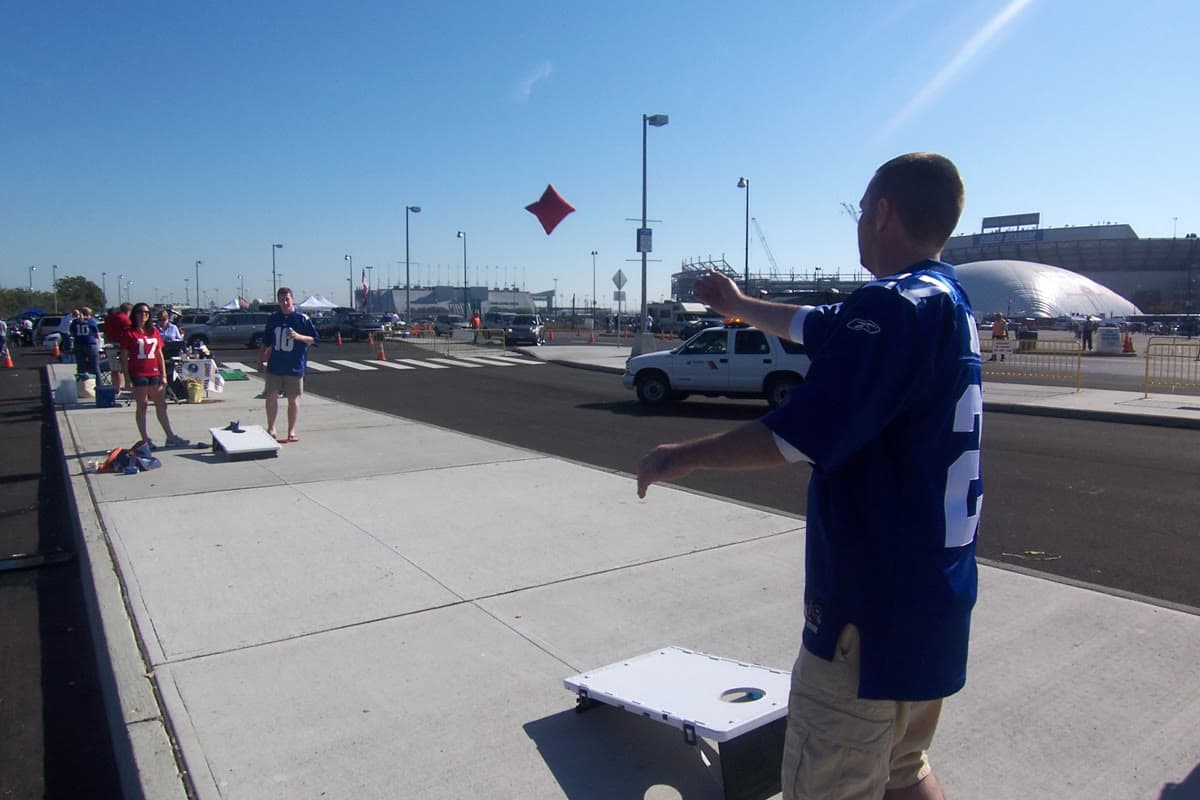
You set up tailgate cornhole between two pickups, bags stacked in school colors, kickoff still hours away. The wrong board size, a design that disappears from twenty yards out, or a set that warps after one wet Saturday can turn a good pregame into a frustrating one. This guide covers size, team colors, build quality, and a parking-lot setup checklist so your set survives the season.
The short answer: Tailgate cornhole is a portable set you carry from your truck to a patch of grass or asphalt, usually in school or team colors. Most buyers pick either regulation 2ft x 4ft boards (authentic play, heavier) or tailgate 2ft x 3ft boards (lighter, easier in a sedan trunk). Match resin-filled bags and a UV-cured print or quality clear coat if the set lives outdoors. Space boards 27ft front edge to front edge when you have room, or shorten to 24ft in tight lots.
| Spec | Tailgate default |
|---|---|
| Board face (regulation) | 24in x 48in |
| Board face (common tailgate) | 24in x 36in |
| Hole | 6in diameter, 9in from top edge |
| Distance (full) | 27ft front to front |
| Distance (tight lot) | 24ft (casual) |
| Bags | 8 total, 4 per side |
According to Wikipedia, cornhole sits alongside other lawn games as a core activity at US stadium tailgate parties. That means your set gets hauled, leaned against bumpers, played on hot asphalt, and stored damp more often than a backyard board ever will.
Regulation vs tailgate board size
Regulation boards measure 24in x 48in with a 6in hole centered 9in from the top edge, per the American Cornhole Association (ACA). Tailgate boards are typically 24in x 36in, one foot shorter on the playing surface. The ACA sells its Backyard 2300 tailgate set at that 2ft x 3ft size with a 1/2in plywood top and collapsible legs, marketed separately from full regulation boards.
| Factor | Regulation 2x4 | Tailgate 2x3 |
|---|---|---|
| Playing surface | 48in long | 36in long |
| Portability | Moderate; ~25 to 30 lb typical | Lighter; fits many trunks |
| Game feel | Tournament-accurate hole placement | Shorter slide; fine for casual lots |
| Best for | Serious home tailgates, league nights | Dorms, tight lots, frequent travel |
Skip's Garage notes that a standard regulation board weighs around 27 lb, while lighter travel boards can hit about 15 lb and heavy builds exceed 40 lb. Heavier boards resist wind gusts in open parking lots, which matters when throwers stand on asphalt with nothing to block the breeze.
Some marketplace listings sell boards smaller than the ACA's 2ft x 3ft tailgate line, still labeled for parking-lot play. Those sit below the common 24in x 36in tailgate size and change hole geometry enough that experienced players notice immediately. Read the product specs before you buy.
The Cornhole Exchange builds a regulation tournament board at full 24in x 48in and a lighter tailgate-weight travel set for frequent hauling. The regulation build matches ACA regulation dimensions; the travel set is built for portability, not sanctioned league play. For face measurements and court spacing, see Cornhole Board Size and Distance.
Team colors and graphics that read in a parking lot
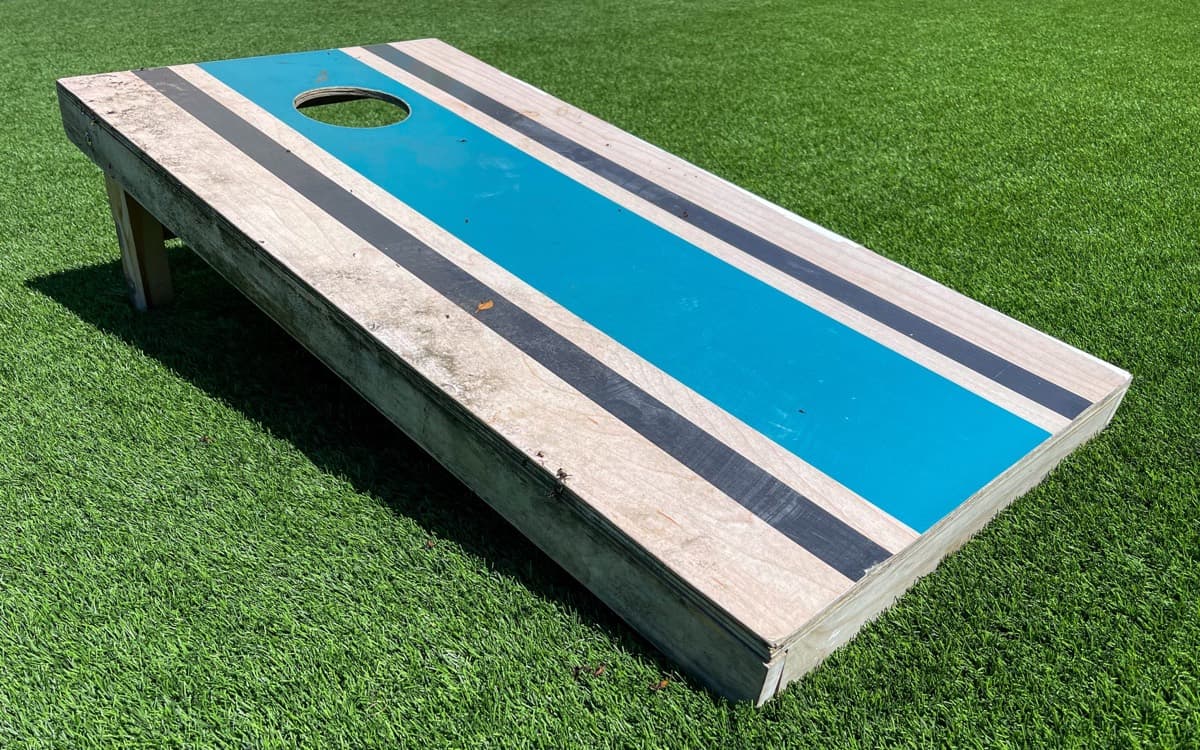
Two strong team colors plus a neutral stripe read better from across a lot than a busy photo or low-contrast gold on yellow. Block layouts, horizontal stripes, and simple initials survive distance and afternoon glare better than fine detail.
Bags matter as much as the board face. A full set includes eight bags, four per side, in contrasting duck cloth colors so scorers at the grill can tell who is winning without walking the court. Pick hues that pop against your board, not shades that blend into the playing surface.
NFL and NCAA logos on retail sets require official licensing. Custom shops need vector artwork and permission from the rights holder. Stripes, graduation years, city skylines, and sponsor logos your group actually owns are safer paths than slapping a trademarked mascot on a board without rights.
For palette ideas, see 25 Cornhole Board Designs and Ideas. Brewery patios, alumni chapters, and sponsor activations that need matching sets should read Corporate Cornhole Sets: Branding Your Next Company Event for branding and matched-set planning.
The Cornhole Exchange designer lets you preview school colors, monograms, and sponsor art on regulation birch with a live preview that updates as you pick wood and layout. After you pay we send a design proof, and nothing is built until you approve it. The materials overview covers cabinet-grade birch, UV direct print, and outdoor clear coat.
Durability: what tailgate boards actually face
Tailgate boards see hot asphalt, wet grass, gravel, and the occasional beer spill. Surfaces that work in a climate-controlled garage can peel, warp, or fade after a season in a truck bed.
A solid build starts with a 1/2in playing surface on a kiln-dried frame with coated hardware. The Cornhole Exchange uses a single sheet of 1/2in cabinet-grade birch sanded to 220 grit on a glued-and-screwed 2x4 pine frame with folding legs. For how birch and plywood compare when boards sit in truck beds or wet grass, see Best Wood for Cornhole Boards.
Finish choice separates sets that last from sets that bubble by October. Many mass-market tailgate SKUs use vinyl wraps, which can peel in parking-lot heat. UV-cured direct print sealed under a marine-grade clear coat holds up better outdoors because the artwork is cured into the surface, not stuck on top. See Cornhole Board Wraps vs Paint for the full comparison.
Bags take abuse too. Resin pellet fill resists morning dew without clumping or molding the way whole-kernel corn fill does. The Cornhole Exchange includes eight dual-sided bags in 6oz duck cloth, filled to a regulation 1lb with resin pellets. For skill-tier context on bag fabrics and fills, see Best Pro Cornhole Bags for Every Skill Level.
Weight and storage round out the durability picture. Skip's Garage puts standard boards around 27 lb and travel boards near 15 lb, with heavy builds above 40 lb for wind stability. Store boards in a dry truck bed or tub rather than leaving wrapped sets baking on asphalt between quarters.
Tailgate cornhole setup checklist
Flat ground, honest spacing, and dry bags matter more than any graphic on game day. Walk through this list before the first throw.
- Scout the patch. Find the flattest ground you can with at least 10ft of clearance behind each board for throwers.
- Measure 27ft. Per ACA regulation, mark front edge to front edge with cones, shoes, or tape when the lot allows it.
- Shorten to 24ft if needed. Crowded lots hemmed in by cars may only fit 24ft. Call it out so everyone plays the same distance.
- Level the boards. Shim the low leg on sloped grass. The ACA spec sets the back edge 12in off the ground.
- Bag check. Confirm eight bags in two colors and dry fabric if you can.
- Wind plan. Weight heavier boards or have someone stand on the upwind leg during gusts.
| Day-of step | What to verify |
|---|---|
| Surface | Flat grass or asphalt, no major slope |
| Spacing | 27ft front to front, or agreed 24ft |
| Boards | Legs locked, front edge level |
| Bags | 8 bags, 2 colors, dry if possible |
| Safety | Clear throw lanes, no tripping hazards |
Buying paths: retail tailgate sets vs custom build
Search results for tailgate gear lean heavily on product grids from All American Tailgate, Tailgating Pros, Victory Tailgate, Custom Cornhole, and marketplace listings. Those paths work when you want a standard team SKU for a single season and a fixed budget.
Custom builds make sense when you need a sponsor logo, matching bag colors, or ten identical sets for an alumni chapter or brewery patio. The Cornhole Exchange builds regulation tournament boards to order in the US. After you pay we send a design proof, and nothing is built until you approve it.
For a full decision framework, see Custom Cornhole Set Buying Guide and How to Make Cornhole Boards vs Custom. Lead time, file formats, and fade questions live in the site FAQ.
Common game-day mistakes
| Mistake | Why it hurts | Fix |
|---|---|---|
| Boards 15 to 20ft apart | Turns into horseshoes; no slide practice | Tape to 27ft or an honest 24ft |
| Boards smaller than the ACA 2x3 tailgate line sold as regulation | Different geometry; frustrates experienced players | Verify dimensions before you buy |
| Dark bags on dark boards | Scorers at the grill cannot read the board | High-contrast bag colors |
| Leaving wrapped boards in sun | Peel and bubble | Store shaded; prefer cured print plus clear coat |
| Corn-filled bags in dew | Clump and mold | Resin fill for outdoor seasons |
What to do after reading this
Pick a board size that fits your trunk and your crew's skill level. Design for contrast from twenty yards out. Build for outdoor seasons with resin bags and a finish that will not peel in a hot lot. Measure honestly on game day so your tailgate cornhole court plays the same from the first throw to the last.
Preview team colors on regulation birch in the designer before anything is built. After you pay we send a design proof, and nothing is built until you approve it. Browse design ideas, read the materials section, or order a set.