Cornhole Boards Size: 24in x 48in, Set 27ft Apart
Marisol Vega, Contributor
Updated (published )14 min read
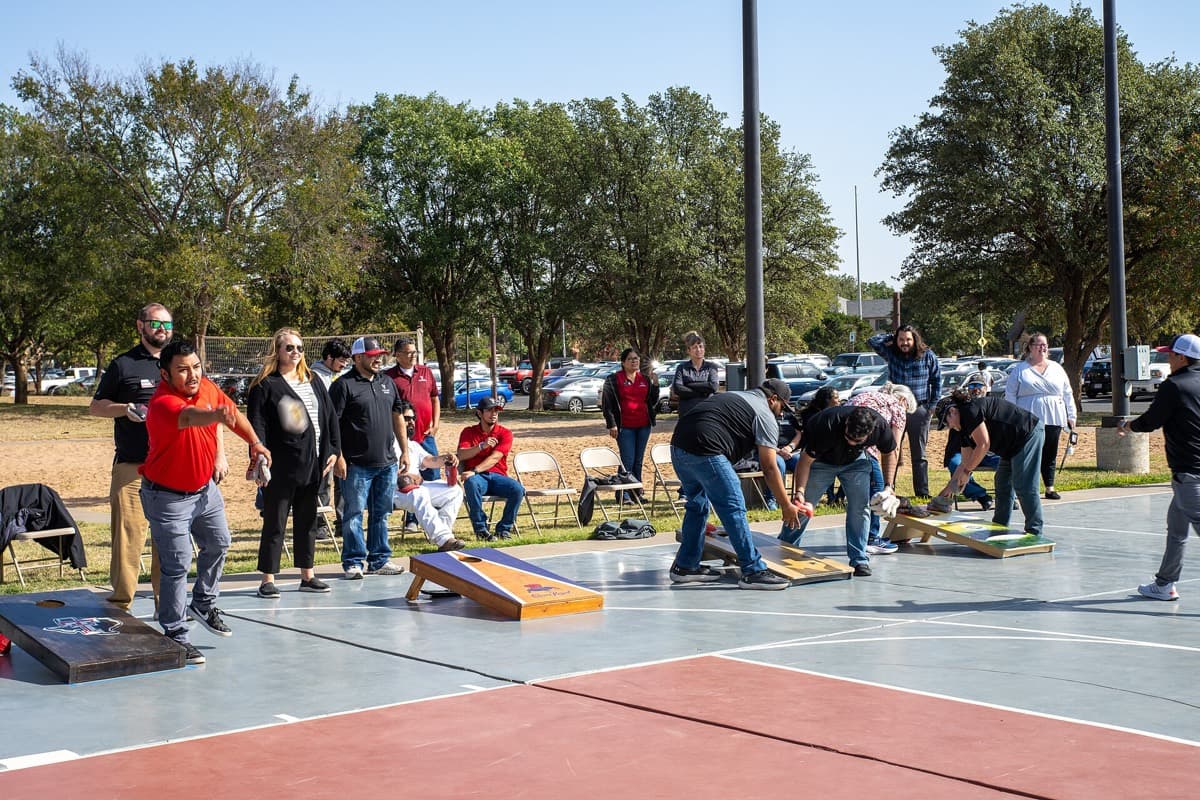
Most cornhole arguments start the same way: someone insists the boards are too close, someone else says the size is off, and nobody has a tape measure. Set regulation boards 27ft apart, front edge to front edge. Cornhole boards size for adult play is a 24in x 48in playing surface with a 6in hole centered 9in from the top edge. The back edge sits 12in high; the front edge sits 3in to 4in high.
The short answer
- Distance: 27ft apart, front edge to front edge (holes then sit 33ft center to center)
- Board size: Regulation cornhole boards size is 24in x 48in on the playing surface
- Hole and height: 6in hole, center 9in from the top edge; 12in at the back, 3in to 4in at the front
- Measure the front edges, not hole to hole. Hole-to-hole measuring puts the boards about 6ft too far apart.
Quick facts: cornhole boards size and distance at a glance
| What you are measuring | Regulation spec | What people get wrong |
|---|---|---|
| Board width | 24in (2ft) | Building to the frame, not the playing surface |
| Board length | 48in (4ft) | Using 2ft x 3ft mini boards at 27ft spacing |
| Hole diameter | 6in | Measuring to the hole edge instead of the center |
| Hole placement | Centered, 9in from the top edge | Placing the hole from the front edge |
| Height at back | 12in | Treating total platform height as the front edge |
| Height at front | 3in to 4in | Setting both ends at 12in |
| Board spacing | 27ft front edge to front edge | Measuring hole to hole (~33ft) or center to center |
| Cornhole distance (front edge) | 27ft | Confusing cornhole distance with 33ft hole-to-hole spacing |
| Hole-to-hole spacing | 33ft on 4ft boards | Treating 27ft as hole distance |
| Junior / casual spacing | 12ft to 15ft (ACA) | Shortening only one board |
Regulation cornhole boards size in plain language
Regulation cornhole boards are 24in x 48in on the playing surface, per the ACA's published equipment specs. That 2ft x 4ft footprint is what adult spacing is built around. The American Cornhole League equipment specifications publish the same face, hole, and height numbers. Where ACL and ACA differ is bags, scoring, and sanctioning, not the board itself. Our ACL vs ACA guide covers that split.
Mini boards are a separate category. The ACA documents 2ft x 3ft boards with the same 6in bags but a shorter surface. Full 27ft spacing with mini boards makes every throw feel impossible. If your set measures closer to 2ft x 3ft, shorten the distance or upgrade to regulation length before you blame your throw.
League hosts and venue managers should verify board size before sanctioned play. A marketplace label of "regulation" is not a measurement. Check the 24in x 48in face, 6in hole, and 12in back height on the boards in front of you.
Face, hole, and height
The hole is 6 inches in diameter, centered left to right, with its center 9 inches down from the top edge. Measure to the center of the hole, not to its nearest edge. That is the most common home-build miss. A hole cut even half an inch large changes scoring over a full game.
A regulation board is 12 inches high at the back edge and 3 to 4 inches high at the front. Folding legs on a kiln-dried 2x4 frame are the usual way to hit both numbers; our legs and portability guide covers the hardware. Size tolerance matters less than flatness. A board that measures 24in x 48in but bows through the middle will play worse than a board a hair off spec that sits dead flat.
Bag toss, baggo, and shopping labels
Bag toss, baggo, bean bag toss, and corn toss are regional names for the same game when the boards measure 24in x 48in. Carnival and tailgate 2x3 sets are a different product even when the box says regulation. If the listing shows a stamp or "official" in the title, still put a tape on the face. The stamp does not replace the numbers in the table above.
What is cornhole distance?
Cornhole distance for adult regulation play is 27ft measured front edge to front edge, per the ACA rules page. Search results also mention 33ft, the hole center to hole center distance on regulation 4ft boards per Dimensions.com's court diagram. Both figures are correct. Front-edge spacing is the number you walk out with a tape measure.
When people ask about the distance between cornhole boards or cornhole board distance, they mean the same thing: 27ft measured front edge to front edge.
| Setup type | Front-edge distance | Best for |
|---|---|---|
| Adult regulation | 27ft | Leagues, tournaments, serious backyard play |
| Junior / beginner | 12ft to 15ft | Kids, first-time players |
| Tight yard compromise | 15ft to 21ft | Mixed skill when 27ft is not possible |
| Measure with rope or laser | 27ft front to front | Repeatable setup without pacing guesses |
| Wrong for regulation 2x4 boards | 2x3 mini boards at 27ft | Mini boards need shorter spacing |
For kids and casual games, the ACA recommends 12ft to 15ft. Some groups use 15ft to 21ft for mixed skill. The ACL uses the same 27ft front-edge spacing for sanctioned play. Equipment size and distance match between the two bodies even where scoring differs.
How far apart are cornhole boards?
For adult regulation play, set cornhole boards 27ft apart, measured front edge to front edge, according to the ACA. The foul line is that front edge. Step past it on your release and the throw is dead. That cornhole boards distance is what you mark on the lawn, not the gap between hole centers.
Once the court is set, scoring, foul-line calls, and cancellation math are the next layer. Our official cornhole rules guide covers those topics once spacing is locked in.
Step-by-step: measure and set up your court
- Pick a flat, level surface with about 12ft of overhead clearance, per ACA court setup guidance.
- Place the first board and confirm the front edge sits 3in to 4in off the ground and the back edge at 12in.
- Mark the front edge of board one with tape, chalk, or any temporary marker you will not kick over.
- Stretch a tape measure 27ft from that front edge to the front edge of board two. A dedicated 27ft setup rope or a laser distance tool beats pacing when you want the same spacing every weekend.
- Square the second board so both front edges face each other and sit parallel.
- Mark pitcher's boxes if you want league-style lanes: 3ft x 4ft beside each board, per both Dimensions.com and ACA court diagrams.
- Walk the foul line with every player so everyone knows the front edge is the line, not the back of the board or the hole.
Quick checklist before the first bag flies:
- Both boards are 24in x 48in (or you adjusted spacing for a shorter board)
- Front edges are 27ft apart, marked and visible
- Front edge height is still 3in to 4in after players walk the line
- Both pitcher's boxes match if you marked them
Event planners running multiple courts should leave extra width between lanes so neighboring throwers do not cross paths.
How much space you actually need
Plan on roughly 40ft of clear length for regulation play: both boards plus throwing room behind each end. The ACA publishes 40ft to 45ft court length and 8ft to 10ft width. Dimensions.com diagrams a 35ft x 8ft footprint (about 280 sq ft), including pitcher's boxes. The gap between those numbers is mostly how each source counts the playing corridor. Either way, you need more room than the 27ft board gap alone, plus 8ft to 10ft of side clearance for follow-through.
Tailgate hosts working a tight lot can find shortened-yard compromises in our tailgate setup guide. Write down whatever distance you choose so the next event starts from the same marks.
When size and distance do not match
| Mistake | Symptom | Fix |
|---|---|---|
| Right size, wrong distance | Good throws fall short or fly long | Re-measure 27ft front to front |
| Right distance, wrong size | 2x3 or non-regulation boards at 27ft | Match spacing to board length or upgrade to 2x4 |
| Hole-to-hole measuring | Boards about 6ft too far apart | Measure front edges |
| One board moved after measuring | Uneven foul lines | Re-measure both edges |
| Sloped lawn | Bags curve downhill | Level boards or pick flatter ground |
| Believing "12in to 15in platform height" blog copy | Boards sit too high | Front 3in to 4in, back 12in per ACA |
That last row is spec drift, not regulation. A 2024 Ocean State Job Lot distance article conflates total platform height with front-edge height. When a secondary source contradicts the ACA on board height, trust the governing body and remeasure.
Backyard shortcuts that still play fair
Shorter distance works when both sides match. Mark spacing with tape or stakes for the next cookout. Call shortened games house rules so a regulation set is not blamed for house spacing. Wedding and tailgate hosts need clearance behind boards for photos, not just the 27ft gap. Corporate and brewery events should spec regulation 2ft x 4ft boards with documented 27ft setup when guests expect real cornhole.
Why regulation size and distance matter for what you buy
Wrong-size boards cannot be fixed with spacing. Wrong spacing makes regulation boards feel broken. If you are tired of re-measuring a questionable set every Memorial Day, compare what you own against the numbers above before you invest in new gear. Our DIY vs custom comparison walks through what a regulation build actually takes if your current set fails the tape measure.
The Cornhole Exchange builds tournament-regulation 24in x 48in boards on a 1/2in cabinet-grade birch playing surface with a 6in hole placed per ACA layout. The designer shows artwork on a regulation-size board before you order a set. Material and lead-time questions live in our FAQ.
What to do after reading this
Measure your boards at 24in x 48in, confirm the 6in hole sits 9in from the top edge, then mark 27ft between front edges before your next cookout. If those check out, your cornhole boards size and spacing are set for fair play. If not, use the mistake table above. Scoring and foul-line details are in the official cornhole rules guide.