Cornhole Board Graphics: Print, Paint, and File Specs for a 24in x 48in Face
Cole Brennan, Contributor
11 min read
You have a logo, a wedding monogram, or a full-bleed pattern ready, but search results mostly sell peel-and-stick vinyl skins. Cornhole board graphics are the artwork plus the method that puts it on a regulation face. This guide covers print files, paint-ready layouts, and what wrap vendors expect, without guessing dimensions. For how long each finish lasts on the playing surface, see cornhole board wraps vs paint. For layout inspiration once your file is sized, see cornhole board design ideas.
The short answer: Cornhole board graphics are the artwork applied to a regulation 24in x 48in playing face. Build or export at full face scale with the 6in hole centered 9in from the top edge, per American Cornhole Association and American Cornhole League equipment specs. Send vector PDF, SVG, or AI when possible; raster PNG or JPG at 150 to 300 DPI at full board size works for photos. Keep logos and text out of the hole zone and outer trim edges. UV direct print cures art into the board surface; paint and vinyl are alternate carriers with different prep.
| Item | Typical spec | Notes |
|---|---|---|
| Playing face | 24in wide x 48in long | ACA/ACL regulation playing surface |
| Hole | 6in diameter | Centered width-wise; 9in from top edge to hole center |
| Artboard (print) | 24in x 48in at 150 to 300 DPI | Cornholeboards.us publishes a 150 DPI PSD template; Ripper Graphics cites 300 DPI for direct print |
| Vector files | PDF, SVG, AI, EPS | Preferred for logos and type |
| Raster files | PNG or JPG, 150 DPI+ at full size | The Cornhole Cave accepts 150 DPI+; avoid upscaling small web images |
| Vinyl wrap blank | Often 25in x 49in | Laporte Graphics kits; trim to 24in x 48in and cut the hole after install |
| Safe zone | Margin around hole and outer edges | Let's Print Big: keep critical art away from hole cut and trim |
See regulation cornhole board dimensions for tolerance detail when you cross-check vendor templates.
What counts as cornhole board artwork?
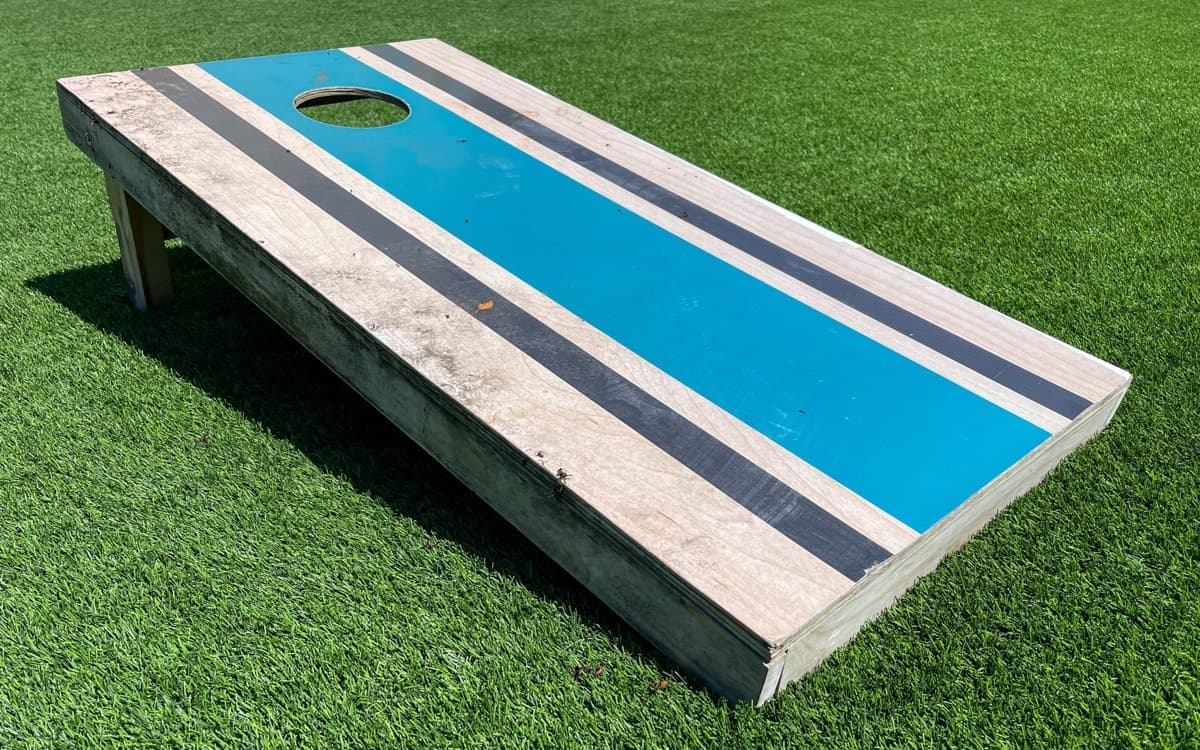
Cornhole board artwork is the visual layer on the playing face: a center logo, a split monogram, a photographic background, or a full-edge pattern. The graphic is not the same thing as how it gets there. Application might be UV-cured ink, brushed paint through a stencil, or an adhesive vinyl skin. Bag graphics and scoreboard hash marks live at a smaller scale and follow different file rules.
Custom cornhole board graphics for a backyard wedding and a brewery league order start from the same regulation artboard. The difference is usually complexity (one logo vs. matched sets) and whether you need a print-ready vector master or a paint layout grid.
Three ways graphics get onto a board
| Path | How the graphic lands | File or prep | Best for | Deep dive |
|---|---|---|---|---|
| UV direct print | Ink cured into the sealed playing surface | Vector or high-res raster at full artboard | Logos, photos, matched corporate sets | Materials, designer preview |
| Paint / stencil | Pigment through a mask or brush | Layout grid plus stencil; optional vector trace | DIY one-off sets, simple color blocks | Stencils guide |
| Vinyl wrap / decal | Adhesive graphic skin | Vendor template; often 25in x 49in oversized sheet | Refreshing an existing plywood top | Wraps vs paint |
At The Cornhole Exchange, printing will be UV-cured into the birch or all-weather playing surface, not stuck on as a vinyl wrap, then sealed under a marine-grade clear coat. That is a different prep path than ordering a wrap kit off Amazon.
File specs for direct-print cornhole board graphics
What size should my cornhole graphic be? Match the playing face exactly: 24in wide by 48in tall.
Cornholeboards.us publishes a Photoshop template at that size with a 6in diameter hole centered 9in from the top, saved at 150 DPI, and offers the PSD as a download. The Cornhole Cave LLC uses a 24in x 48in pro artboard with the hole at 12in side to side and 9in from the top (they list 5.85in diameter, a slight vendor rounding from the 6in regulation callout). Always confirm hole placement with whoever prints the board.
What file format works best? Vector first. PDF, SVG, AI, or EPS keeps logos and type sharp when the art scales. The Cornhole Cave accepts those vector formats plus raster PNG or JPG at 150 DPI or higher at full board dimensions.
What DPI do I need? For raster art, treat 150 DPI at full 24in x 48in size as the floor. That math is 3600 pixels wide and 7200 pixels tall. Ripper Graphics recommends at least 300 DPI for photo-heavy direct print. The playcornhole.org customs design guide cites 96 DPI minimum and 300 DPI recommended for embedded photos on printed fabric (a different substrate, but a useful contrast: do not assume a bag-file spec transfers to a board face).
Bleed and safe zones: If your printer allows bleed beyond 24in x 48in, keep must-read text inside an inner margin. Never place critical copy inside the 6in hole circle or tight against the outer edges. Let's Print Big notes that even a quarter-inch misalignment shows once a wrap is trimmed or a hole is cut, which is why wedding dates and brewery taglines belong in the lower two-thirds safe band.
Color: RGB is fine for screen proofing. League and corporate buyers should note Pantone callouts on brand guidelines so matched sets stay consistent. Some print shops want CMYK conversion; ask before you export.
Quality check: Cornholeboards.us offers optional QA review on submitted files. The Cornhole Exchange will run a free file check on every uploaded design once the designer opens, with a human flagging anything that needs adjustment before production.
Graphics for paint and stencil paths
Hand-painted cornhole board designs skip the print shop file handoff but still need the same hole grid. Lay out your art on a 24in x 48in face, mark the 6in hole zone, and keep fine type away from edges where tape bleed shows.
Most paint-path builders rasterize a logo onto paper or order an adhesive mask, then follow the step-by-step in our stencils and layouts guide. Wedding buyers planning split monograms can borrow layout formats from monogram cornhole board ideas for weddings.
When paint bleed keeps ruining the same logo, that is usually a signal to move toward direct print or wait for the coming designer preview instead of fighting another coat.
Graphics for vinyl wraps
Wrap shops sell finished skins, not print-ready board files. Laporte Graphics cornhole wrap kits ship two oversized sheets at 25in x 49in for 24in x 48in boards, printed on 3M wrap vinyl with UV inks and a UV gloss laminate, from $49.95 per set according to Laporte Graphics. You trim to size and cut the hole after application.
Live search results in September 2026 showed Kyle's Cornhole Boards wraps roughly $35 to $85 and Cornhole America listings around $52 to $63; Google's AI overview cited $30 to $104 for laminated vinyl wrap sets sized for regulation faces. Those prices buy adhesive graphics, not a built-to-order UV print file spec.
Wrap templates and print artboards are not interchangeable. A 25in x 49in bleed layout will confuse a direct-print vendor expecting a true 24in x 48in face file.
Designing graphics that read from 27ft
Players stand about 27ft from the opposite board. Bold shapes, high contrast, and limited fine type survive outdoor light better than thin script or low-contrast pastels.
Keep the hole zone clean. A brewery logo crowding the cup opening gets cut or hidden once the hole is drilled. Wedding script that looks elegant on a phone screen can disappear at throwing distance.
For theme ideas without repeating a listicle here, browse 25 cornhole board design ideas. The layout rules above still apply no matter which style you pick.
Matching graphics across multiple sets
Business and league orders fail when every board gets a slightly different export. One locked vector master on a 24in x 48in artboard beats re-scaling wrap files board by board.
Volume buyers should send Pantone callouts, point to brand guidelines, and approve a single proof before a run of ten or more matched sets. Our corporate cornhole sets branding guide walks through that workflow; business occasion planning covers how bulk quoting will work once ordering opens.
What the coming designer changes for your files
The Cornhole Exchange designer is still in development. When it launches, it will show your graphics on a regulation tournament board face in birch or all-weather material, with full preview, zoom, and shareable links so a partner or marketing director can sign off before anything is built.
It will accept PNG, SVG, and PDF uploads, the same formats noted in our FAQ. It will not replace the artboard rules above: you still want vector logos where possible and full-size raster files for photos. Read what a custom cornhole board designer will let you preview for scope detail, or check The Designer for the launch announcement.
Common cornhole board graphic mistakes
| Mistake | Result | Fix |
|---|---|---|
| Low-res logo stretched to full face | Blurry type from throwing distance | Redraw as vector or export at full 150 to 300 DPI size |
| Artboard not 24in x 48in | Cropped logo or off-center hole | Download a vendor template or use the published hole grid |
| Critical text in hole zone | Cut or obscured by the cup | Move art to the lower two-thirds safe band |
| RGB neon on print | Muddy color on the finished board | Request a proof; use Pantone for brand sets |
| Different file per board in a league order | Color and scale drift across sets | One locked master file on a print path |
| Assuming wrap specs equal print specs | Wrong bleed on a built-to-order board | Confirm with the printer; UV print is not 25in x 49in vinyl |
What to do after reading this
- Size your artboard. Export cornhole board graphics at full 24in x 48in scale with the hole zone cleared and critical copy in the safe band.
- Pick your path. UV direct print, paint and stencil, and vinyl wrap refresh each need different file prep; match the table above to your build.
- Preview before you send. If the layout still feels uncertain, keep an eye on the coming designer preview for a regulation-face check before you hand files to a printer or wrap shop.