Regulation
Regulation Cornhole Board Dimensions: Every Measurement That Matters
Marisol Vega, Contributor
8 min read
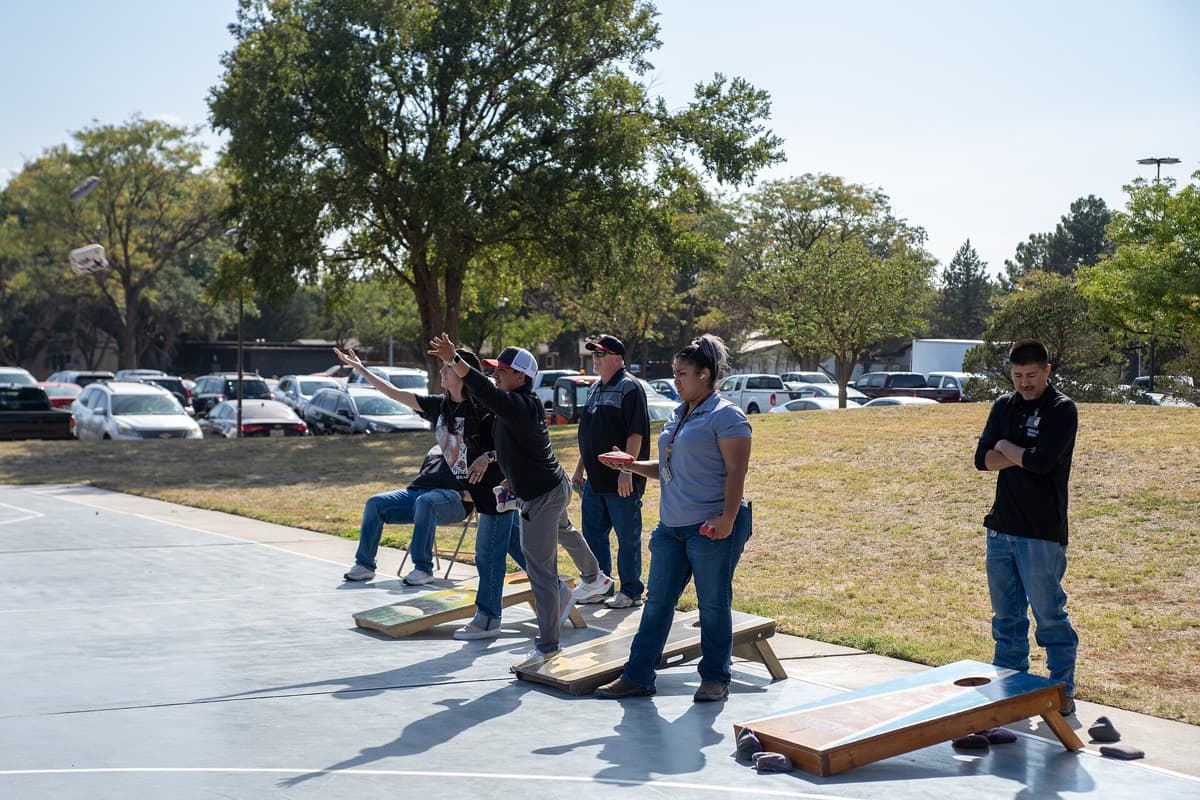
Most people find out their boards are the wrong size the first time someone brings a regulation set to the cookout. The bags land differently, the throws that used to work do not, and a board that felt fine for two seasons suddenly plays short.
The short answer A regulation cornhole board has a 24in x 48in playing surface with a 6in hole centered 9in from the top edge. The front edge sits between 3in and 4in off the ground and the back edge sits 12in high. Boards are placed 27ft apart, front edge to front edge.
Quick facts
| Measurement | Regulation spec |
|---|---|
| Playing surface | 24in x 48in |
| Hole diameter | 6in |
| Hole placement | Centered side to side, 9in from the top edge |
| Height at back edge | 12in |
| Height at front edge | 3in to 4in |
| Distance between boards | 27ft, front edge to front edge |
| Bags per set | 8, four per team or player |
| Bag size | 6in x 6in |
| Bag weight | 1lb, give or take an ounce |
The playing surface: 24in x 48in
A regulation board is 24 inches wide and 48 inches long, which is exactly 2ft by 4ft. That number is not arbitrary. It matches a standard plywood sheet cut in halves, which is why the spec has stayed stable while almost everything else about the sport has changed.
The surface itself is what decides how the game feels. Our tournament boards use a single sheet of 1/2in cabinet-grade birch, sanded to 220 grit, because a seam or a soft spot in the middle of a board sends bags off line in ways nobody can plan around. Thinner plywood flexes underfoot and drums when a bag lands, and the flex gets worse once a board has spent a summer outdoors.
Size tolerance matters less than flatness. A board that measures 24in x 48in but bows a quarter inch through the middle will play worse than a board a hair off spec that sits dead flat.
The hole: 6in across, 9in from the top
The hole is 6 inches in diameter, centered left to right, with its center 9 inches down from the top edge of the board. Measure to the center of the hole, not to its nearest edge, which is the single most common measuring mistake in a home build.
Six inches is generous enough that a well-thrown bag drops through cleanly and tight enough that a bag has to actually be thrown well. A hole cut even half an inch large changes scoring noticeably over a full game, and it is the kind of error nobody notices until a match gets close.
Board height and the ramp
A regulation board is 12 inches high at the back edge and 3 to 4 inches high at the front, which gives the surface its gentle ramp. Our boards reach that with folding legs on a kiln-dried 2x4 pine frame, glued and screwed at every joint, so the geometry holds after the board has been thrown in a truck bed a few dozen times.
The ramp is why bag slide is a real variable rather than a marketing line. Finish changes the same throw more than most players expect:
| Finish | How it plays | Best for |
|---|---|---|
| Matte | Slowest slide, no glare | Backyard play, bright sun, newer players |
| Satin | The tournament standard | League and sanctioned play |
| Gloss | Fastest slide, deepest color | Experienced players, indoor venues |
How far apart do cornhole boards go?
Boards are set 27 feet apart, measured from the front edge of one board to the front edge of the other. That puts roughly 33 feet between the two holes.
You need about 40 feet of clear length to play comfortably, since players need room to stand and throw behind each board. The pitcher's box runs alongside each board, and the front edge of the board is the foul line: step past it as you release and the throw does not count.
Shortening the distance for kids or a tight yard is completely normal. Just move both boards in by the same amount so the two sides stay even.
Where ACL and ACA specifications differ
Two bodies govern most organized play in the United States, and they do not publish identical rules. The American Cornhole League and the American Cornhole Association agree on the numbers that define the equipment, the 24in x 48in surface, the 6in hole 9in from the top, the 12in back edge, and the 27ft separation. Where they diverge is around it: bag construction and approval, court layout and pitcher's box detail, scoring formats, and which bags are legal for sanctioned events.
If you are buying for league play, check which body your league sanctions under and confirm the bag requirements specifically, since that is where an otherwise regulation set gets ruled out. For backyard, tailgate, and company events, either specification gets you a board that plays correctly.
Common measuring mistakes
| Mistake | Why it hurts | Fix |
|---|---|---|
| Measuring the hole from its edge | Puts the hole roughly 3in out of position | Measure 9in to the center of the hole |
| Building to the frame instead of the surface | Surface ends up under or over 24in x 48in | Cut the top to spec first, build the frame to it |
| Setting distance hole to hole | Boards end up about 6ft too far apart | Measure 27ft front edge to front edge |
| Ignoring flatness | Bags wander on a bowed board that measures correctly | Check with a straightedge before finishing |
| Guessing bag weight | Light or heavy bags change every throw | Fill to 1lb per bag |
Bags are part of the spec
A set is eight bags, four per side, at 6in x 6in and about 1lb each. Fill is where sets differ most. Ours are dual-sided 6oz duck cloth, one slick side and one stick side, filled with resin pellets rather than corn. Resin does not rot, clump, or draw pests, and it holds its weight through a wet fall, which matters more than it sounds if your boards live on a patio.
What to do after reading this
Take a tape measure to the boards you already own before you buy or build anything. If the surface is 24in x 48in, the hole center is 9in down, and the back edge is 12in high, you have a regulation set and the only thing left to think about is finish and bags. If it is off, decide honestly whether you want to spend a weekend correcting it or start from a board that arrives to spec. Every board we build is regulation before it is anything else, which means the design is the only decision left to you.