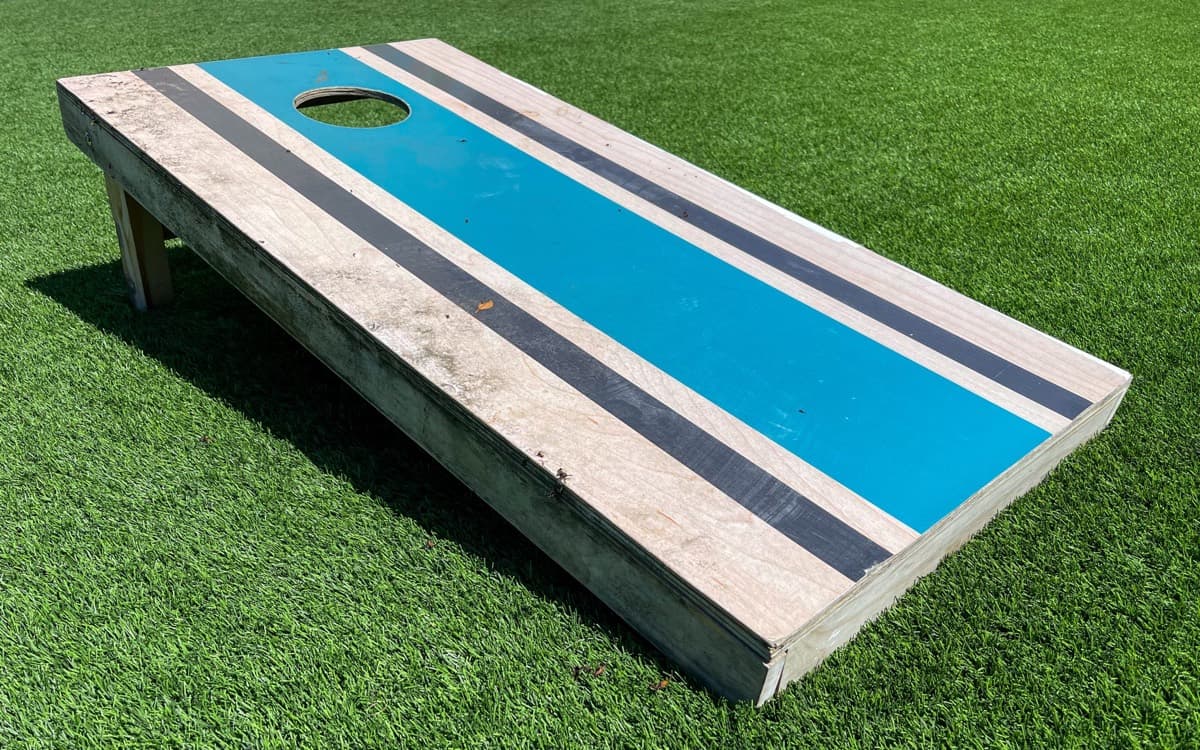
Cornhole Board Blueprints vs Buying a Finished Regulation Set
Cole Brennan, Contributor
11 min read
You probably have cornhole board blueprints open in more than one tab: a Kreg cut list, a YellaWood PDF saved, or a Home Depot how-to pinned. The real question is not how to cut a 6in hole. It is whether Saturday in the garage is worth it compared to picking up a finished regulation set, especially when logo placement and slide speed matter as much as lumber.
The short answer: Free cornhole board blueprints can produce a regulation backyard set from home-center lumber and hardware (plus tools you may not own) if you follow ACL and ACO dimensions carefully. Buying or ordering a finished set trades cash for verified tolerances, finish chemistry, and zero layout risk. When artwork, not carpentry, is the hard part, previewing a regulation face in the coming designer matters as much as either path.
What cornhole board blueprints actually include
Cornhole board blueprints (searchers also call them cornhole board plans or a cornhole plans pdf) are printable cut lists with step photos, not shop drawings with tolerances stamped on every edge. A cornhole board cut list tells you how many 2x4s to buy. It rarely tells you whether your plywood will cup before the first cookout.
Three formats show up in search results:
| Format | What you get | Typical source |
|---|---|---|
| Free PDF plans | Cut list, hole layout, frame diagram | Kreg Tool, YellaWood, Grizzly Industrial |
| Big-box how-to | Materials list, photos, fewer printables | The Home Depot |
| Pre-cut kit | Pre-cut lumber plus assembly guide | ACA DIY Cornhole Board Kit |
Here is what most free regulation cornhole board plans cover versus what they leave out:
| Blueprint element | Usually included | Often missing |
|---|---|---|
| 24in x 48in top | Yes | Wood grade guidance |
| 6in hole layout | Yes | ACL ±1/8in hole tolerance check |
| Frame cut list | Yes | Cross-bracing for bounce control |
| Leg fold hardware | Sometimes | Exact 12in rear / front height band per body |
| Finish schedule | Vague "semi-gloss" | Cure time, slickness vs grip |
| Bags | Rarely | Regulation weight and fabric |
| Custom art | DIY paint only | Vector layout, bleed, preview |
For the full ACL and ACO tolerance tables, see our regulation cornhole board dimensions guide.
Regulation measurements every blueprint should match
Official dimensions come from the governing body you plan to play under, not from any single free PDF. The American Cornhole League (ACL) and American Cornhole Organization (ACO) publish similar but not identical numbers.
| Spec | ACL published requirement | ACO published requirement |
|---|---|---|
| Playing surface | 24in x 48in (±1/4in) | 24in wide, 47.5–48in long |
| Hole diameter | 6in (±1/8in) | 6in |
| Hole placement | 9in from top edge, centered width-wise | 9in from top edge, centered width-wise |
| Front edge height | 2.5–3.5in | 3–4in |
| Rear height | ~12in | ~12in |
| Minimum board weight | 15 lb | Not specified in research sources |
| Top thickness | 1/2in with cross support, or 3/4in without | Varies by plan source |
According to ACL Rules & Regulations, boards must weigh at least 15 lb and use a minimum 1/2in top with cross-section support or 3/4in without.
Watch the lumber stack, too. Kreg Tool's free regulation plan specifies 3/4in plywood tops and 1x4 pocket-hole frames. YellaWood and The Home Depot plans spec 1/2in plywood with 2x4 frames. Same search intent, different boards.
Three ways people use cornhole board blueprints
-
Scratch build from a free PDF. Sources like Kreg Tool, YellaWood, Grizzly Industrial, Four Oaks Crafts, Instructables, and HGTV publish free regulation DIY cornhole board plans. Lowest material cost, highest skill and tool assumptions. YellaWood publishes a 4-hour active build estimate for its ACO-dimension plan. Lowest material cost, highest skill and tool assumptions. YellaWood publishes a 4-hour active build estimate for its ACO-dimension plan.
-
Big-box how-to without a formal PDF. The Home Depot's article walks through materials and assembly with photos but less printable layout. Fine if you already know your way around a circular saw.
-
Pre-cut assembly kit. The ACA DIY Cornhole Board Kit lists at $198 (September 2026 product page) for pre-cut Baltic birch 1/2in 9-ply tops, a poplar frame, a printed assembly guide, and 28 lb finished weight per board. Paint, stain, sealant, and bags are sold separately. The kit trades lumber shopping and most cutting for assembly; finish, paint, and bags still sit outside the box, and cure time still applies.
Real cost: blueprints vs buying finished
This is the fork most searchers actually want answered.
| Cost line | DIY from blueprints | Pre-cut kit (ACA example) | Finished / custom order |
|---|---|---|---|
| Lumber and hardware | Home-center lumber and hardware, plan-dependent | ~$198 kit | Included |
| Tools (if you do not own) | Rental or purchase, plan-dependent | Basic drill/driver | None |
| Bags (8 regulation) | Sold separately on most DIY paths | Not included | Often bundled on retail sets |
| Finish (paint/stain/seal) | Paint, stain, sealant on you | Not included | Factory applied |
| Active build time | 4–10+ hours | Assembly-focused (cutting mostly done) | 0 |
| Finish cure / multi-day | 1–3 days | Still needed | Done |
| Design iteration | Repaint plywood | Same | Preview before build (designer, coming soon) |
Popular Woodworking Plans and Weberz Media both note that scratch builds add up once materials, tools, and finish cure days count. Weberz Media cites 10+ hours spread across multiple days when polyurethane cure time is included.
Buying or ordering finished trades those line items for a board that arrives ready to throw on. Our custom cornhole set buying guide covers what to look for in proof files, lead times, and finish type without pushing you toward a cart that does not exist yet. For the wider tool-rental and labor math, the DIY vs custom comparison goes deeper than this blueprint-focused piece.
Where DIY blueprints miss regulation play
Backyard builds fail in predictable ways. Free plans rarely call these out.
| Mistake | Result (or why it hurts) | Fix |
|---|---|---|
| Wrong plywood face | ACX big-box smooth side down | Inconsistent slide; see wood types guide |
| Hole off-center | String-and-pencil layout drift | Unfair pitch practice |
| No cross-brace | Minimalist 2x4 box | Bounce and flex |
| Skipped weight check | Light 1/2in build | Does not meet ACL 15 lb minimum |
| Gloss too sticky or too fast | Wrong exterior product | Bags stop or fly off |
| PT framing + indoor stain | YellaWood pressure-treated path | Finish adhesion issues |
Leg geometry causes its own headaches. Most free plans treat folding hardware as an afterthought. Our legs and portability guide covers the 12in rear height band and carriage-bolt details plans skip.
When buying a finished regulation set makes more sense
Skip the garage if you lack shop space, do not own a miter saw or hole saw, or cannot wait 1–3 days for polyurethane to cure before the party.
Finished sets also win when tolerances and slickness need to match tournament play. If you are practicing for ACL events, a board that misses the 15 lb minimum or runs the wrong slide speed wastes practice time.
For leagues, breweries, and event planners: blueprints do not solve matching branded faces across four to twenty sets. Each scratch build introduces slightly different hole placement, paint sheen, and frame flex. You still need vector artwork prepped, color matched, and reproduced identically board to board. That is a production problem, not a pocket-hole jig problem. Volume orders need file prep and consistent lead times that a PDF cut list cannot provide.
When blueprints are the right call
Build from plans when you enjoy woodworking, play mostly casual backyard games, and already own a saw, drill, and sander. Free sources stay attractive when you plan to stain or paint something you will maintain yourself. The ACA kit at $198 is the sourced middle ground if you want pre-cut lumber without ordering finished boards.
Free sources (Kreg, YellaWood, Grizzly, Instructables) are genuinely useful starting points. Just verify the revision date on any cornhole plans pdf you download, because lumber stacks change between publishers.
A third path: preview before you cut or order
Sometimes the hard part is not the 2x4 frame. It is getting a logo centered on a 24in x 48in face without repainting plywood three times.
The Cornhole Exchange designer, coming soon, will let you preview a regulation tournament board on a birch or all-weather face with full artwork, zoom, and shareable links. That is a different problem than printing a cornhole board template and hoping the bleed looks right at arm's length.
You will not configure or order from it at launch. You will see what the finished face looks like before sawdust or a purchase order. Read what the designer preview will show for scope details, or browse materials to see how a cabinet-grade birch face differs from big-box ACX plywood. The designer page will host the preview when it goes live.
Step-by-step: if you commit to the blueprint route
Point your browser at Kreg Tool, YellaWood, or Grizzly for the actual cut diagrams. This day plan covers decision framing only.
| Step | Day | Action |
|---|---|---|
| 1 | Day 1 AM | Print cut list; verify 24in x 48in tops and hole center marks |
| 2 | Day 1 | Frame square check (diagonal measure) |
| 3 | Day 1 | Cut 6in hole; sand hole edge |
| 4 | Day 1 | Attach legs; verify 12in rear height |
| 5 | Day 2 | Sand playing surface; apply first finish coat |
| 6 | Day 3+ | Cure, light sand, second coat; test slide with real bags |
Leg geometry details belong in the legs guide, not duplicated here.
What to do after reading this
If you are building from cornhole board blueprints, start with the dimensions guide and wood types guide, then work through the DIY vs custom comparison for tool costs. If you are leaning toward finished or custom, read the buying guide and designer preview explainer. Once boards arrive, the size and distance guide covers court spacing for real games.