Regulation
Cornhole Tournament Rules for Rec Leagues
Marisol Vega, Contributor
12 min read

You searched for cornhole tournament rules because you are running league night, not because you forgot how many points a woody is worth. The fights that kill a season start before the first bag lands: captains arguing cancellation versus straight addition, brackets that run past last call, and courts that do not match the signup sheet.
The short answer: Rec-league cornhole tournament rules stack three layers: pick one published body standard (ACL, ACA, or a written house variant) for equipment and foul calls; publish a match format (pool play, single or double elimination, or timed games to 21); and post roster, substitution, scoring, and tiebreaker rules before the first bag is thrown. Gameplay scoring and 27ft setup live in our official cornhole rules guide; this piece covers bracket and league-night operations only.
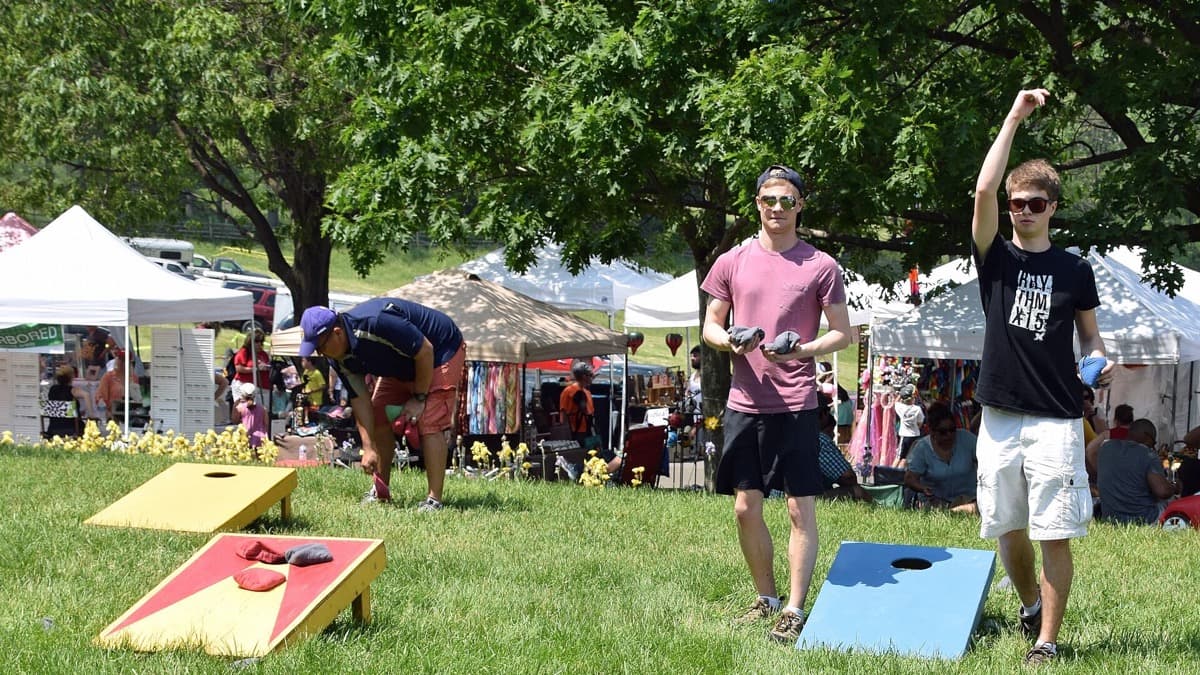
Cornhole tournament rules vs backyard rules (what changes on league night)
Backyard games run on memory and good faith. A rec league runs on a one-page ops sheet every captain can point to when something goes sideways.
On league night, a director adds five things beyond generic gameplay rules:
- A published equipment spec for boards, bags, and court distance
- Match and bracket structure so everyone knows how many games they get
- Roster and substitution policy, including what happens when someone no-shows
- A scorer workflow and a clear dispute path (self-scored with host override is common)
- Optional pitch-clock enforcement when the venue has a hard stop
If you are a player joining a Thursday bar league for the first time, expect match play with written standings, not a casual cancellation game on the patio. Your captain should hand you the house sheet on night one.
Mixing standards creates silent disputes. Playing ACL-approved bags at one end of the bar and ACA distance at the other sounds fine until someone foot-faults on a line nobody marked. Our ACL vs ACA vs backyard guide explains where those bodies diverge so you can pick one path and stick to it.
Pick one standard before you print the bracket
Do not reprint entire rulebooks on signup day. Ask two questions, write the answer on the sheet, and match your equipment to that choice.
- Does any team expect ACL-style bag lists, approved equipment, or pitch clocks?
- Is this casual ACA-style club play where house rules can simplify calls?
| If your league… | Start with… | Why |
|---|---|---|
| Bar night, bring-your-own bags, no officials | ACA published rules plus a written house sheet | Flexible, familiar to casual players |
| Sanctioned-style doubles, timed boards | ACL published rules plus a pitch-clock policy | Matches TV-style pace and equipment lists |
| Fundraiser, mixed skill | ACA baseline plus simplified house rules | Easy to explain to first-time players |
Throwing style matters here. According to ACL Rules & Regulations (updated October 2025), overhand throws are allowed under ACL rules. ACA published rules require underhand delivery. Your league must publish which body you follow, or write an explicit house call, before arguments start.
Equipment every rec league should check in
Every court should pass the same checklist before pool play. Measurements below come from ACL and ACA published specs unless noted.
| Item | Rec-league default | Verify at check-in |
|---|---|---|
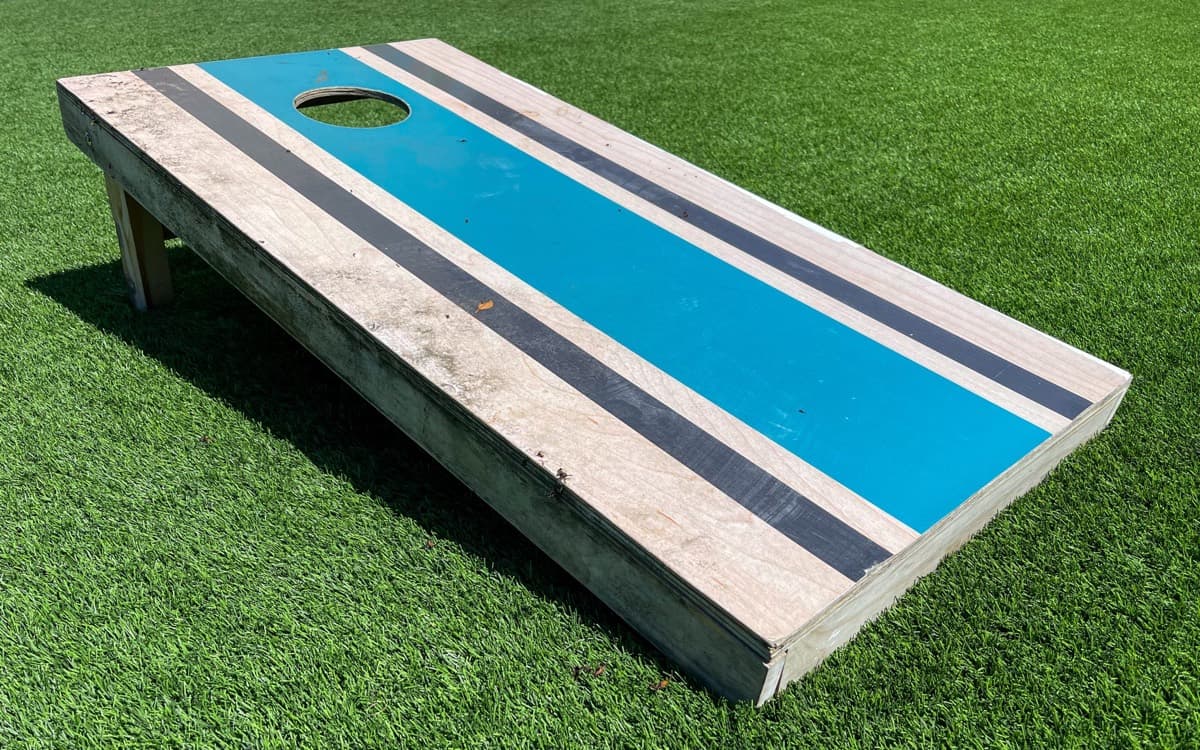
| Board face | 24in x 48in (ACL/ACA published) | Same slide feel on all courts |
| Hole | 6in diameter, 9in from the top edge | Same hole placement on every board |
| Distance | 27ft front edge to front edge (adults) | Tape or laser once per court |
| Bags | 8 total, 4 per team, contrasting colors | Weight band per your adopted standard |
| Pitcher's box | 3ft x 4ft area (U.S. Cornhole Ch. 4) or body equivalent | Foul line marked at front edge |
Full measurement breakdowns live in our regulation board dimensions guide. For bag count, color assignment, and weight bands, see the how many cornhole bags guide. Leagues that allow bring-your-own bags should also publish which fill types are legal and link to our best cornhole bags by skill level guide so captains know what qualifies.
Multi-court venues need matched regulation sets so lane three does not play faster than lane one. Directors scaling from one patio court to a full fleet can publish a spec sheet captains trust, as outlined in our bar and league bulk ordering guide.
Scoring formats rec leagues actually use
Most online guides stop at cancellation math. Bar leagues often choose something simpler. Pick one format, post it at the scorer table, and do not switch mid-season.
| Format | How it works | Common in | Pitfall |
|---|---|---|---|
| Cancellation (ACA/ACL standard) | Only net points per frame count | Most published-body leagues | Captains bad at subtraction |
| Non-deduction (straight addition) | Every legal bag counts toward team total | Bar leagues like By All Means Brewing | Differs from TV/ACL expectations |
| Game to 21, no bust | First to 21+ at end of frame wins | ACA FAQ, most rec nights | Players expect a "bust" that does not exist |
| Timed match (e.g., 20 min) | Leader at buzzer wins | Large fundraisers, U.S. Cornhole timed events | Needs a visible clock per board |
Cancellation matches ACA and ACL tournament play. Only the net score from each frame adds to the running total. See our official cornhole rules guide for a worked example rather than reprinting the math here.
Non-deduction scoring is what By All Means Brewing uses for league nights: every legal bag counts, with no subtraction. Directors choose it because addition at the bar is faster to track and easier for new players to follow. It is not what ACL events use on TV, so say so on the signup sheet.
Game to 21 with no bust: According to the ACA Cornhole Rules FAQ, you do not need to win by 2, and there is no bust rule. If you land on exactly 21 or go over during a frame, you win when that frame ends. Going over 21 is not an automatic loss.
Forfeit scoring varies by league. FXA Sports records forfeit wins in the match record. By All Means Brewing records forfeit wins as 21–0. Pick one and publish it.
Match formats and bracket types
Bracket choice drives how long your night runs and how many games the last-place team gets.
| Format | Best for | Typical flow | Rec-league note |
|---|---|---|---|
| Round robin / pool play | 4–8 teams, season standings | Everyone plays everyone | FXA: 5 games in ~60 min window |
| Single elimination | Small charity fields | Lose once, out | Fast; fewer games for losers |
| Double elimination | Club championships | Losers bracket | ACL tiered brackets after Rounders |
| Progressive round robin (ACL Rounders) | 16+ teams, skill seeding | 4–6 rounds by record, then tiers | Overkill for a 6-team bar league |
| Timed round-robin | Venue hard stop | 20-min games, rotate | U.S. Cornhole: ~3 games/board/hour |
According to the ACL 2023–2024 Player Guide, ACL Doubles Rounders runs as a progressive round robin (4–6 rounds), then splits into tiered double-elimination brackets. Events with 64 or more entries may split into separate point brackets. That format makes sense for large sanctioned fields. A six-team brewery league does not need it.
For fundraisers with a firm end time, U.S. Cornhole recommends 20-minute timed games (Chapter 3.2): standard gameplay rules apply, and the leading team when the buzzer sounds wins that game.
Team size, rosters, and substitution
Doubles is the default for most rec leagues: two active players per team, four bags each, partners on opposite boards in standard doubles format.
FXA Sports allows 2–4 players on a roster with rotation between games, but the same two players must finish any game they start. If a player is absent, FXA lets the solo player start each game at 0–5.
Directors should publish:
- Whether mid-season roster adds are allowed or frozen after week 2
- Whether one-night fill-ins count toward standings or are guest players only
- How blind-draw doubles and bring-your-own-partner nights differ from fixed rosters
Self-scoring with a host override, the FXA model, works for bar leagues without line judges. Captains mark scores; the league director settles disputes from the posted rule sheet.
Pace of play: pitch clocks, timeouts, and league nights
ACL-style pace rules exist for a reason on televised boards. Most rec leagues can treat them as optional.
According to ACL Rules & Regulations (updated October 2025):
- A 15-second pitch clock starts after the opponent's bag comes to rest
- Each player or team gets four 60-second timeouts per match
- The first throw of a new round gets 45 seconds in doubles or 60 seconds in singles
- A shot-clock violation burns a timeout before the bag is forfeited
Practical guidance for bar nights: run honor-system warnings first, then enforce a visible clock on championship boards only. Full ACL versus ACA clock differences are in our ACL vs ACA guide.
Standings, tiebreakers, and playoffs
FXA Sports publishes a tiebreaker stack worth copying or adapting:
- Head-to-head record
- Fewest points scored against
- Point differential
- Coin toss
Regular-season standings track game wins within each match (5–0, 4–1, and so on). FXA runs quarterfinals as best-of-3 and semifinals/finals as best-of-5.
Post the tiebreaker order on your standings page before week 3, when every team still thinks they are in contention.
Season-night plan for directors
| Week | Director task |
|---|---|
| Before signup | Pick ACL/ACA/house standard; publish scoring format |
| Week 0 | Equipment check; tape courts; post rule sheet at scorer table |
| Each night | Confirm rosters; coin flip or RPS for honors; record game scores, not just points |
| Mid-season | Tiebreaker reminder on standings page |
| Playoffs | Bracket type and match length on one page |
Fundraiser and sponsor-night events that share this bracket playbook often need branded courts and multi-team logistics. Our corporate cornhole sets guide covers that parallel path for charity hosts.
Common rec-league mistakes (and how to avoid them)
| Mistake | Why it hurts | Fix |
|---|---|---|
| No written scoring format | Cancellation vs non-deduction fights every week | Pick one; post at the bar and in signup |
| Mixed board specs across courts | Slide and hole feel differ by lane | Matched regulation sets; see bulk guide |
| Bracket too big for venue time | Last teams play once at midnight | Timed games or smaller pools |
| Ignoring substitution rules | Ringers show up in playoffs | Publish roster deadline |
| Re-teaching 27ft every week | Captains trust word of mouth | One equipment poster plus dimensions link |
What to do after reading this
Draft your one-page house rules sheet: standard, scoring format, bracket type, roster policy, tiebreakers, and forfeit language. Then walk your courts against the equipment checklist above. If you still need baseline gameplay (cancellation math, foul lines, over-21 scoring), start with the official cornhole rules guide. League directors planning matched regulation boards can review build specs in our FAQ and browse the full blog for dimensions and bag guides. A regulation tournament board designer with live preview, zoom, and shareable links is coming soon for venues that want to publish a court spec captains can see before season starts.